

Automotive intelligence is moving from adding functions toward improving the overall experience. As the intelligent cockpit becomes a space for deeper interaction between people and vehicles, smart devices are also moving beyond single-purpose tools toward more natural interaction and companionship, bringing a greater sense of connection and emotional value to the in-car experience.
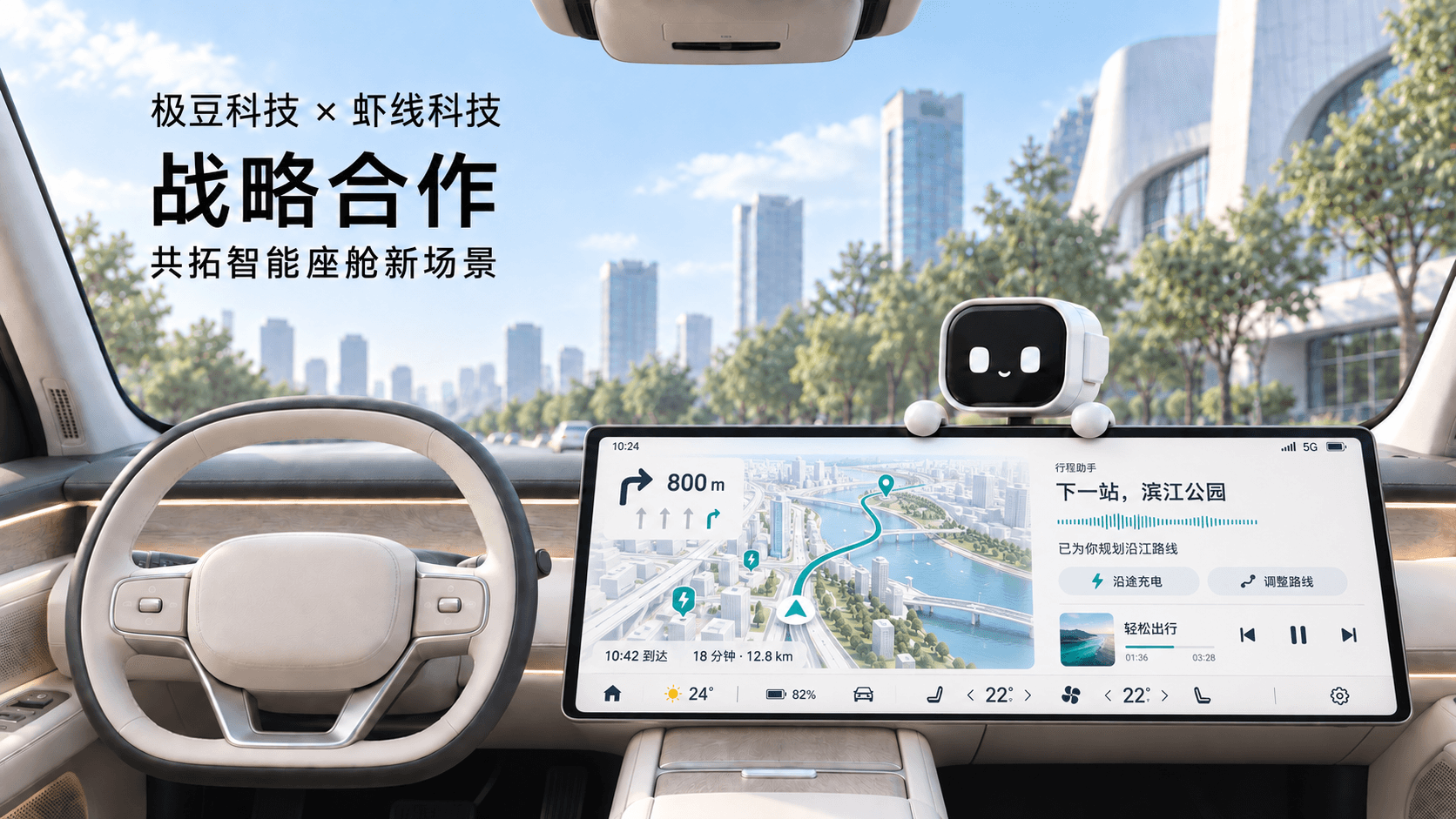
JDO and Shanghai Xiaxian Technology Co., Ltd. recently entered into a strategic partnership. The two companies will work together on intelligent cockpits and smart in-vehicle products, exploring how hardware such as in-vehicle robots can work with cockpit systems.
JDO: Connecting Data, Services, and In-Vehicle Use Cases
JDO is a China-based AI technology company focused on developing and providing AI solutions built around domain-specific large models and agents. In this partnership, JDO will draw on its long-standing work in intelligent interaction, in-vehicle services, and automaker projects to refine the in-car interaction experience for different vehicle models and user needs.
The companies aim to connect AI interaction capabilities with in-vehicle hardware and bring task planning and service invocation to devices such as in-vehicle robots. By combining hardware with agents built on domain-specific large models, they hope to develop cockpit solutions that integrate software and hardware. When a user expresses a travel need, subsequent interaction should continue around that need, linking information recommendations and service choices while reducing the need to repeat requests or switch between tasks.
Shanghai Xiaxian Technology offers in-vehicle robots, smart fragrance devices, and Bluetooth rotary-knob displays, along with product development, engineering, and supply chain capabilities.
The partners will bring their respective strengths together to co-develop products around interaction methods, service integration, and vehicle-model adaptation. Devices such as in-vehicle robots could provide a more direct means of interaction, connecting in-car companionship with practical driving needs.
Addressing Different Needs in Passenger and Commercial Vehicles
Intelligent cockpits have become an important part of passenger-vehicle technology. Building on existing capabilities, the partnership will explore how devices and cockpit services can work together for needs such as daily commuting and family travel. For a trip, the destination, route, and stops for energy replenishment are often parts of one request. An effective interaction needs to connect those steps, rather than answer each question separately.
Commercial-vehicle cockpits are another possible area for JDO and Shanghai Xiaxian Technology to explore. Compared with passenger-car users, commercial drivers place greater emphasis on safety, efficiency, cost, and ease of operation. Charging information, routes and road networks, safety and fatigue alerts, and places to park or replenish supplies are all closely tied to their daily work.
A commercial-vehicle cockpit cannot simply reproduce a passenger-car solution. Information, interaction, and services must be organized around actual operating conditions. Guided by automakers' needs, the companies will explore ways to bring navigation, road network, energy, and safety information into commercial-vehicle cockpits, using interactions suited to driving tasks to support drivers in their work.
Adapting and Testing Solutions Around Automaker Needs
Automotive technologies and products ultimately need to be tested in real automaker projects. That testing must reflect actual use: whether a user's request is understood correctly, whether related services connect smoothly, and whether information is presented appropriately for the driving situation.

Going forward, the two companies will co-develop products around automakers' specific needs and continue testing and refining their joint solutions for the users and cockpit layouts of different vehicle models. The partnership will further connect in-vehicle devices with services as the companies explore the value of intelligent cockpits across more vehicle models and use cases.