

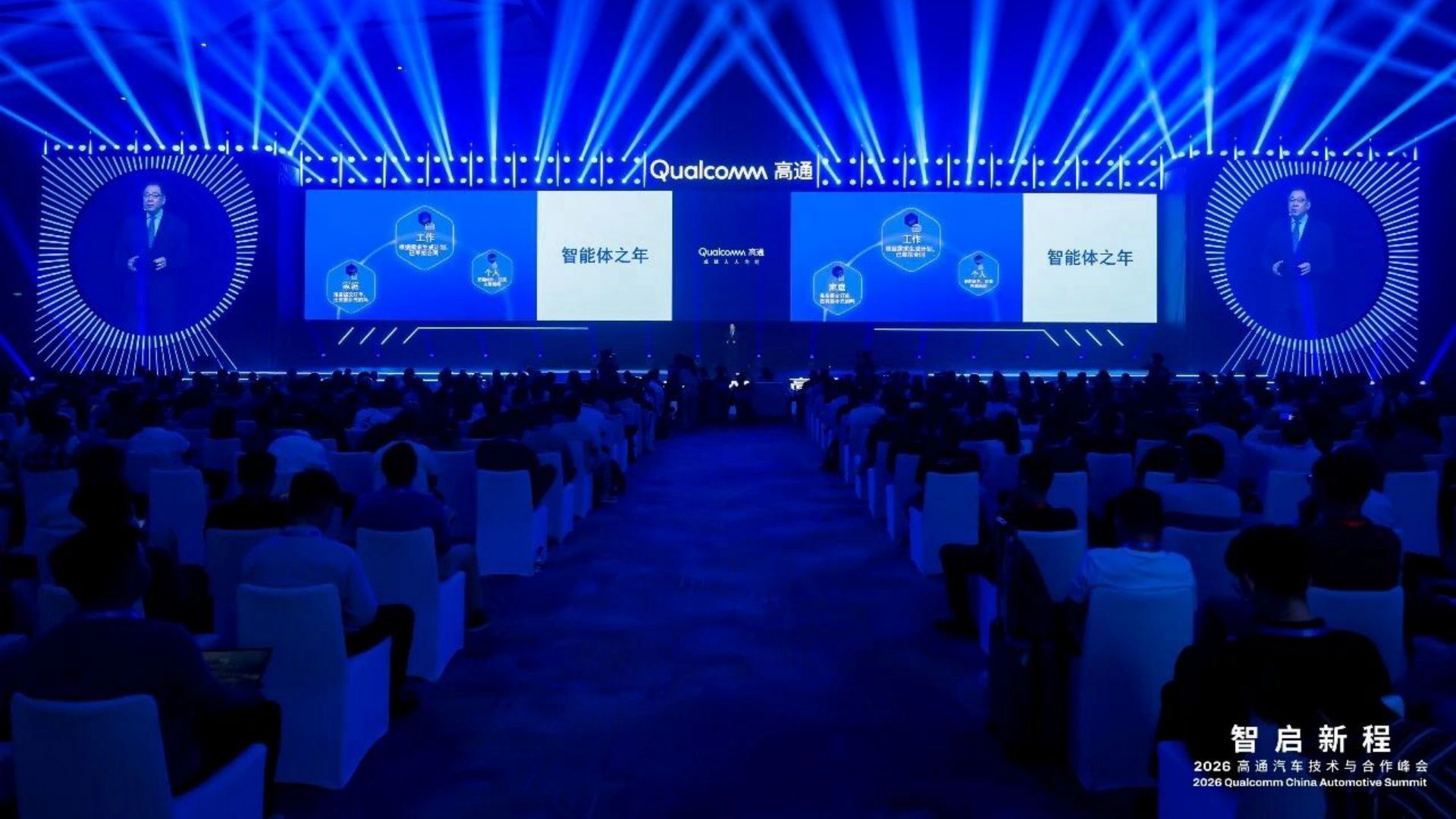
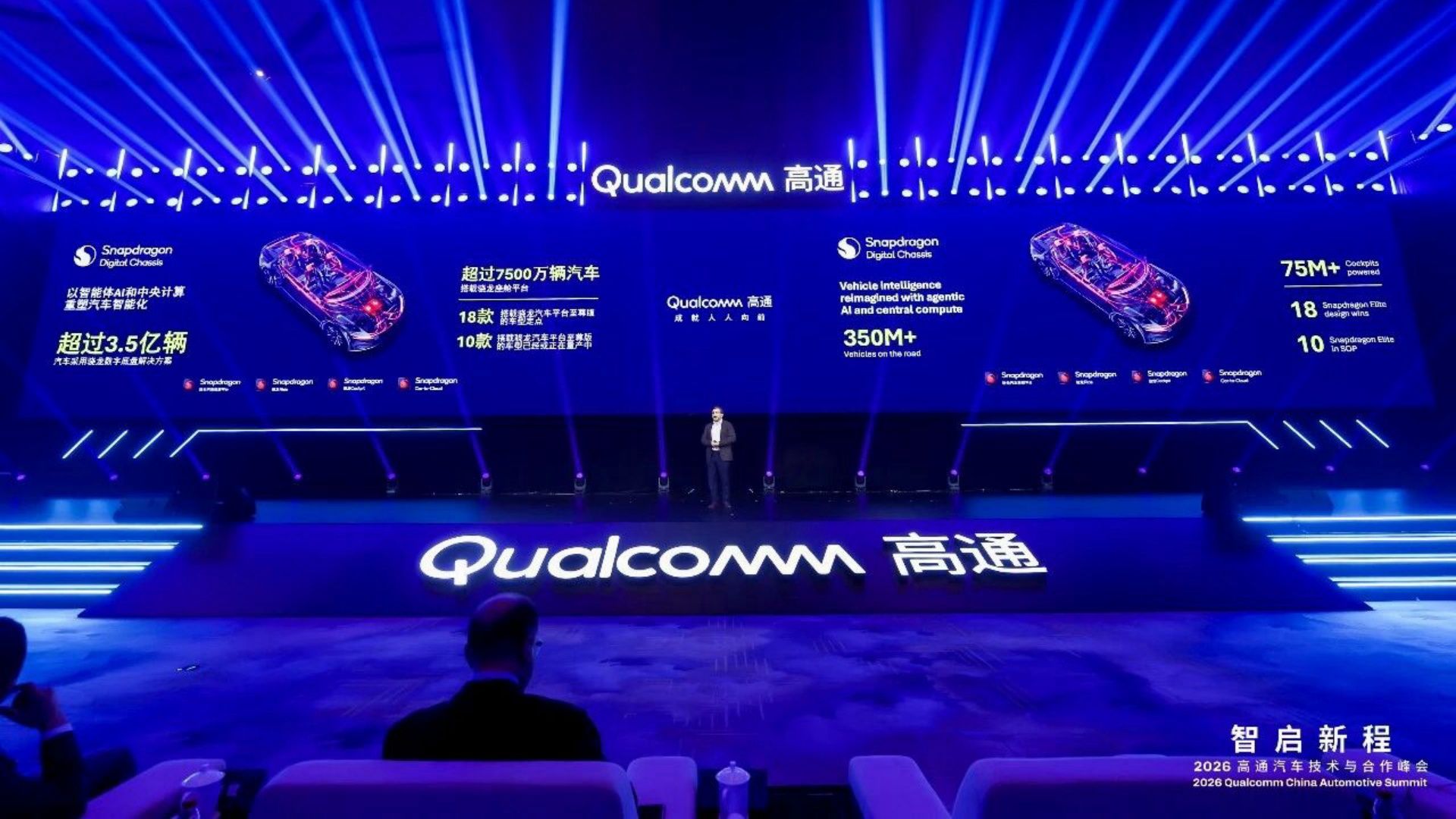
The 2026 Qualcomm Automotive Technology and Collaboration Summit took place at the Wuxi International Conference Center on June 4–5 under the theme “Intelligence Opens a New Journey.” As an important annual summit for Qualcomm's automotive business, the event brought together automotive ecosystem partners from around the world for in-depth discussions on advanced technologies, including intelligent cockpits, embodied robotics, physical AI, on-device computing, and agent ecosystems, exploring the latest trends in automotive intelligence.
JDO was invited to attend the summit, where it explored AI-driven innovation in intelligent cockpit experiences and services with industry partners and reached multiple cooperation agreements. At this critical stage of rapid progress in automotive intelligence, the industry is gradually evolving from Software-Defined Vehicles (SDVs) toward more advanced AI-driven experiences and agent-based proactive service systems, transforming the cockpit from a conventional space for human-machine functional interaction into an intelligent service environment.
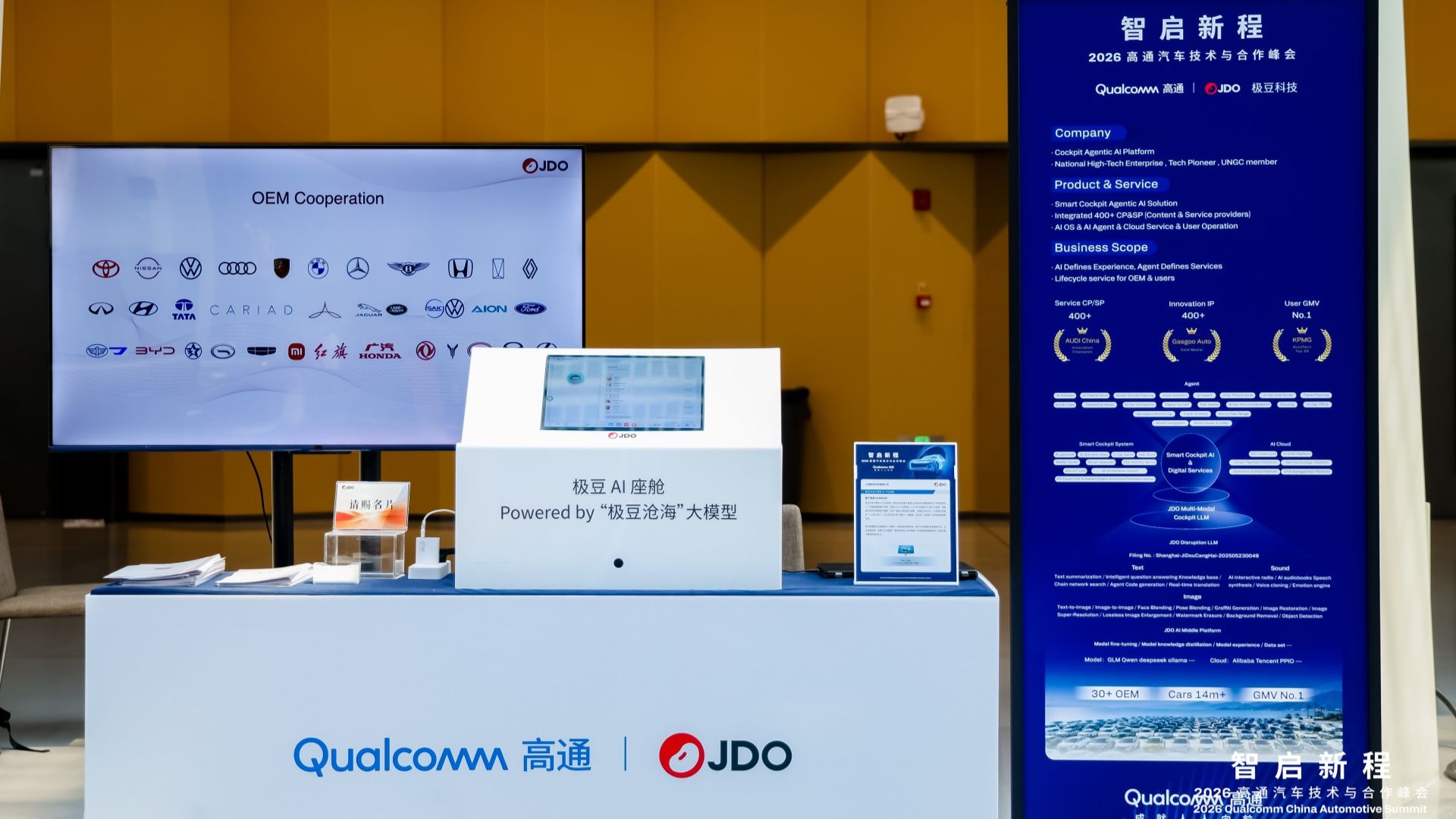
In response to this industry trend, JDO has built a next-generation intelligent cockpit technology system addressing the needs of automakers and users. Its capabilities include foundational multimodal cognition, a full-stack AI technology framework, integrable in-vehicle subsystems, and an architecture for agent collaboration, providing automakers with intelligent cockpit solutions ready for production, operation, and continuous iteration. The company's independently developed multimodal large model, Canghai, has completed China's generative AI service filing and algorithm filing. Covering core AI capabilities including speech, vision, natural language understanding, recommendation algorithms, and on-device inference, it serves as the foundational cognitive engine for natural cockpit interaction, contextual understanding, and intelligent responses.
At the cockpit software platform layer, AIOS manages computing-resource scheduling, model inference, and ecosystem service integration through a unified framework, creating a reusable cockpit middleware layer. This provides a highly configurable foundation for intelligent capabilities across different vehicle models and automaker architectures. At the agent collaboration layer, JDO has built a comprehensive agent ecosystem on a unified technical architecture, including an AI platform, an agent platform, MCPHub, and a Multi-Agent collaboration platform. This architecture supports concurrent integration of multiple models, agent orchestration, ecosystem service invocation, and collaboration across use cases, enabling end-to-end service execution from user intent recognition and context analysis to task completion.
Based on this system, JDO has built an agent portfolio covering 54 use cases, including mobility services, everyday services, entertainment, workplace collaboration, and social interaction, providing broad ecosystem coverage through a shared underlying architecture. Representative deployed applications include Douxing Pay, AI podcasts, interactive music, virtual companions, and 3D digital humans, demonstrating the practical service capabilities of agent technology in intelligent cockpits.
To date, JDO has established partnerships with more than 30 automaker customers. Its technology solutions have been deployed in production vehicles, with cumulative coverage exceeding 14 million vehicles, while planned future installations are expected to exceed 40 million. These figures demonstrate the company's production delivery and ecosystem integration capabilities. With the continuous return of large volumes of real-world cockpit data, JDO has established a positive cycle of “data collection → model training → product iteration → service operation.” This provides a solid data foundation for the continued evolution of product capabilities and operational performance, gradually building a long-term competitive advantage based on both data scale and depth of use-case coverage.